
Most sites don’t provide static text displaying on the screen. In reality, almost everything you view online is served out of a database. Regardless if you are examining a social media platform, determining product filters on an Amazon product page, or heading through a blog like this one, you are processing structured data categorized, contained, served, and performed from a Content Management System (CMS). Establishing an overall understanding is essential for establishing a functioning web display and why data in some form is the hidden engine that runs the modern internet.
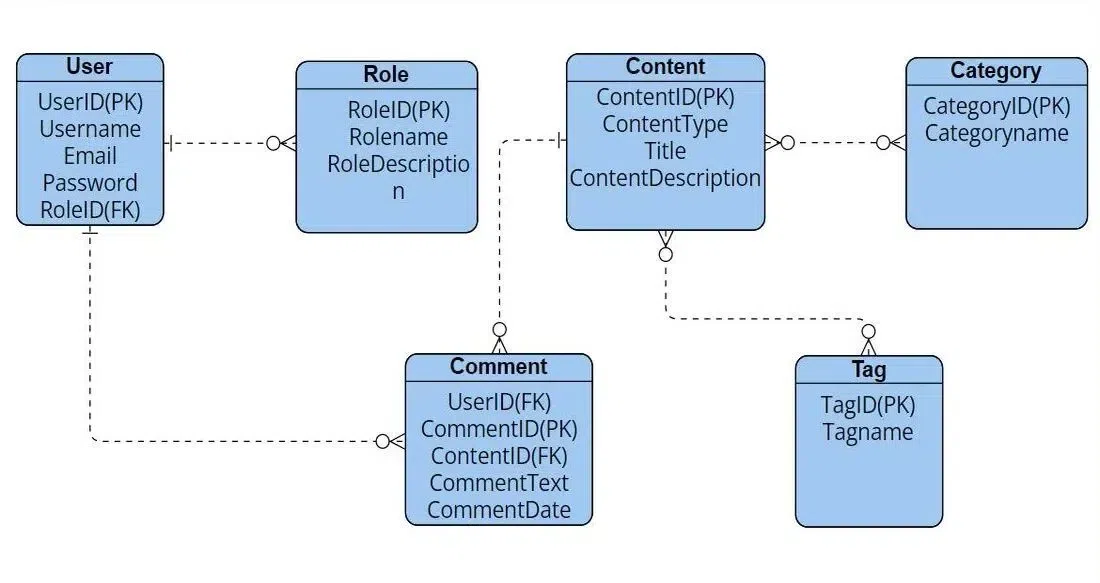
What Is Structured Data?
Even more so, structured data means the way the information is organized in a predictable format (tables, fields, rows, categories, etc.). Accordingly, structured data makes search, filtering, and displaying all for the site administrator automated.
In a WordPress database, each blog post has structured fields such as:
| Field | Example |
|---|---|
| Post Title | “Top UX Trends for 2025” |
| Author | Mousab Eltgani |
| Category | IS 429 |
| Tags | UX, CMS, Structured Data |
| Date | November 18, 2025 |
You don’t see this database directly but WordPress uses it every time a page loads. That’s how thousands of posts can live on one website without manually editing each page. This structure is what makes sites searchable, scalable, and user-friendly.
You do not see this database directly, although WordPress uses it every time a page is loaded. This is how thousands of posts can be preserved in a single website without manually rewriting the content. Structuring data references the automatic searchability, scalability, and usability for the site consumers.
Why Databases Matter to Content Management
Surprisingly, you interact with databases without realizing it. Any time you:
- Search for an article
- Click on a category
- Log into an account
- Post a comment
you are triggering a database query. As a result, A well-organized database helps websites:
- Load faster
- Keep content consistent
- Store users + media + comments
- Support search and filters
- Scale to thousands of pages
WordPress, Drupal, and Joomla all are all web applications that use a database like MySQL or MariaDB. Without structured data, it would be slower, chaotic, and difficult to manage content. Because unless you are making decisions about a structure for the data, all the modern web applications that support multiple authors and editors use structured data methods.
Structured Data and SEO: A Powerful Combination
Search engines don’t only read words they also read structure. For this reason, websites often use schema markup, which is a standardized way to label data so Google understands it more clearly.
When structured data is added properly:
1. Google can show rich results (reviews, ratings, FAQs)
2. Search rankings can improve
3. Content becomes easier for AI to understand
4. Accessibility tools can read it more clearly
Learn more about structured data here.
Here’s an example of optimization in action.
Why This Matters for You as a Content Creator
In IS429, content isn’t just writing it’s strategy. If you understand how data is structured beneath the surface, you can:
- Write cleaner posts
- Format content for SEO
- Create scannable pages
- Deliver better user experiences
- Understand how CMS plugins work
The goal isn’t just to publish content it’s to organize content in a way that humans and machines both understand.
Call To Action
Finally, have you ever looked inside a WordPress database or tried to use a plugin that is automatically inserting structured data into a web page? Let us know your thoughts or questions about structured data in the comments below and we can start to unpack how structured data is shaping every corners of the web.
